



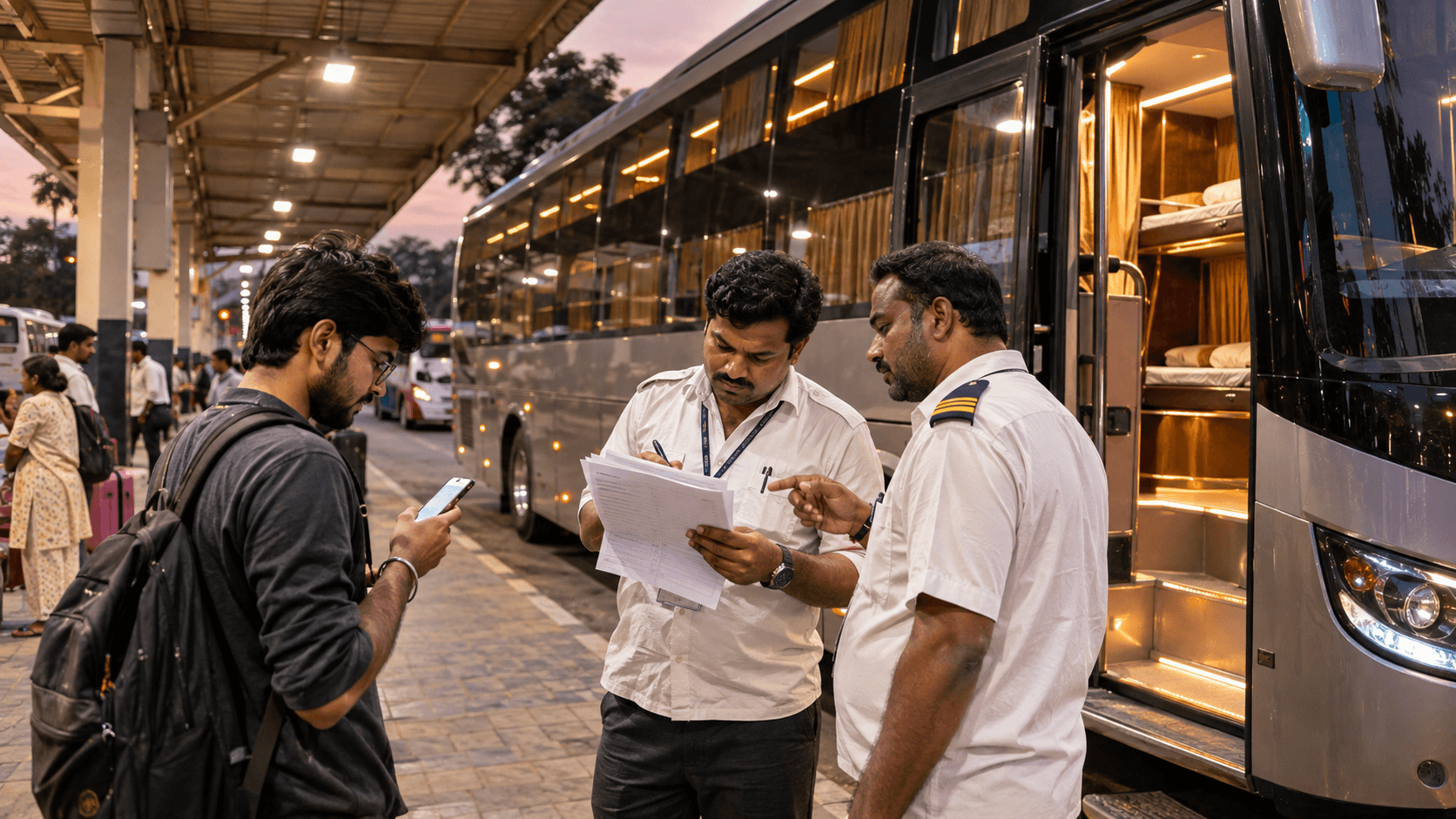


A passenger chooses seat 8 on a bus operator's website. At the same time, an agent sells seat 8 at the counter. Both receive a confirmation. The problem is not the seat map's appearance; it is that two booking channels did not share one inventory.
For an Indian bus operator, a direct booking website should make the route easy to discover and the booking trustworthy. It also needs to reflect the work already happening at the counter and on other sales channels. redBus's operator platform explicitly describes management of routes, boarding points, bookings, agents and inventory. Those are useful requirements to examine before commissioning a separate direct-sales site.
Start with a dated trip, not a generic route page
A route such as Gorakhpur to Lucknow can run on several dates and at several departure times. Give every departure its own trip record with a coach, layout, fare, available seats and operational status. Keep the public route page for discovery, but calculate availability from the selected trip.
Show the pickup and drop-off points before checkout. Include location details, reporting time and the operator's contact method. A passenger who knows only the city name may arrive at the wrong stop. If a boarding point changes, update the trip record and notify affected passengers through an approved channel.
Prevent double bookings across channels
A seat needs a state: available, temporarily held, confirmed, blocked for operations, or cancelled. A checkout hold should expire automatically after a short period. It should not become a ticket just because someone opened the payment screen. Record agent and counter sales in the same inventory, or arrange a reliable integration with the existing operator system. Otherwise a direct website can actually increase dispatch disputes.
When two customers request the same seat, the server should allow only one hold using an atomic database operation. Test this with simultaneous checkout attempts. Build a way for staff to block a seat or change the coach, with an audit trail and a passenger communication plan.
Confirm payment on the server
The browser's success message is not enough to issue a seat. Razorpay's integration guidance requires payment signature verification, and its security checklist calls for trusted order IDs and verified webhooks. The ticket workflow should confirm the payment against the expected trip, amount and hold before moving the seat to confirmed. A failed payment should release the hold without creating a ticket.
Model cancellations separately from refunds. The customer should see the operator's actual cancellation terms before paying. A refund request can be pending even when the seat has been released for resale; those are different states.
Give dispatch staff a usable manifest
At departure, staff need a compact passenger list with seat number, boarding point and a safe way to verify the booking. Mark checked-in and no-show passengers without erasing the original transaction. Export or print a manifest when connectivity is weak, but decide which system remains authoritative if offline changes occur.
For a small fleet, start with one route and one coach layout. Test counter bookings, two simultaneous online buyers, payment timeout, changed boarding point and a last-minute cancellation before rolling out every route. A direct booking site becomes valuable when its operational records are as dependable as its checkout.
If you operate routes and need a website that shares seat availability with your existing booking process, tell me how you currently sell seats. I can help scope a direct booking flow around your actual dispatch workflow.


