



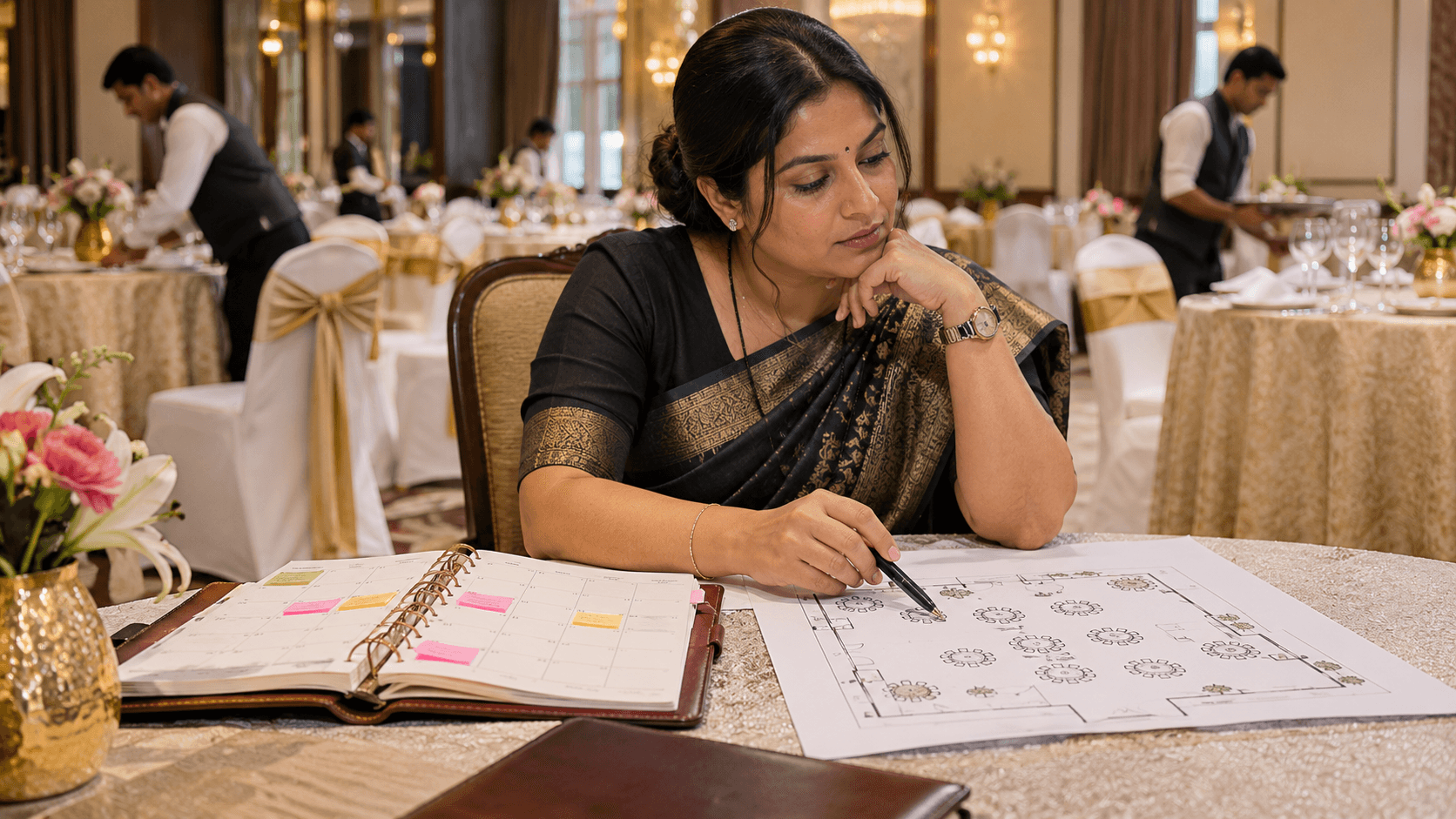


Two families ask an event venue about the same Saturday. One salesperson puts a pencil mark in a diary; another sends a quote without seeing it. Both customers believe the date is available. A website form alone cannot solve this. The venue needs one definition of availability and a clear path from enquiry to confirmed booking.
An online system should reduce back-and-forth while leaving staff room to assess capacity, setup time and special requirements.
Separate enquiry, hold and booking
An enquiry expresses interest. A hold reserves a date temporarily under the venue's policy. A booking is confirmed only when the stated conditions are met. These states must have different labels in staff views and customer messages. Give every hold an expiry and an owner; otherwise old tentative enquiries can make a calendar look full for months.
If the venue has multiple halls, gardens or rooms, model each space separately. Add setup and teardown windows, not just the event hours. A morning function and an evening function may still conflict if staff need the same room all afternoon.
Ask for information that affects a quote
Collect preferred date, alternate date, estimated guest count, event type and the spaces or services requested. Keep the first form short; a sales conversation can confirm catering, equipment and timing. Show where the enquiry goes and when staff expect to reply. If the date is only indicative, say “request availability” rather than “book now.”
Create a quote record with version number, included services, exclusions, expiry date and approval status. If the guest count changes, preserve the original quote and issue a revision. Staff should be able to explain which version a customer accepted.
Connect the public site to the team calendar
Use one booking source of truth. Website forms, phone calls and walk-ins should enter the same staff workflow. The site may show available dates if the data is maintained reliably; otherwise an enquiry-first approach is more honest. Test a simultaneous request for the same date and a hold expiring while a customer is reading a quote.
Send reminders to the responsible staff member when a hold nears expiry. Customer notifications should reflect real status changes, not an automatic “confirmed” message triggered by form submission.
Avoid misleading search markup
Google's Event structured-data guidance covers real, public events on individual event pages. An open date in a venue calendar is not an event and should not be marked as one. Focus on useful venue pages: capacities, facilities, location, accessibility information, real photography and a working enquiry path.
For an initial pilot, use one space and a few weeks of enquiries. Compare what the system says with the existing diary and test cancellations, date changes and quote revisions. If the team still keeps a private second calendar, find out why before rolling the system out.
I can scope a venue enquiry and quote workflow at adityazen around your actual room and hold rules. The goal is simple: customers get accurate answers and staff can see exactly who has promised what.


