



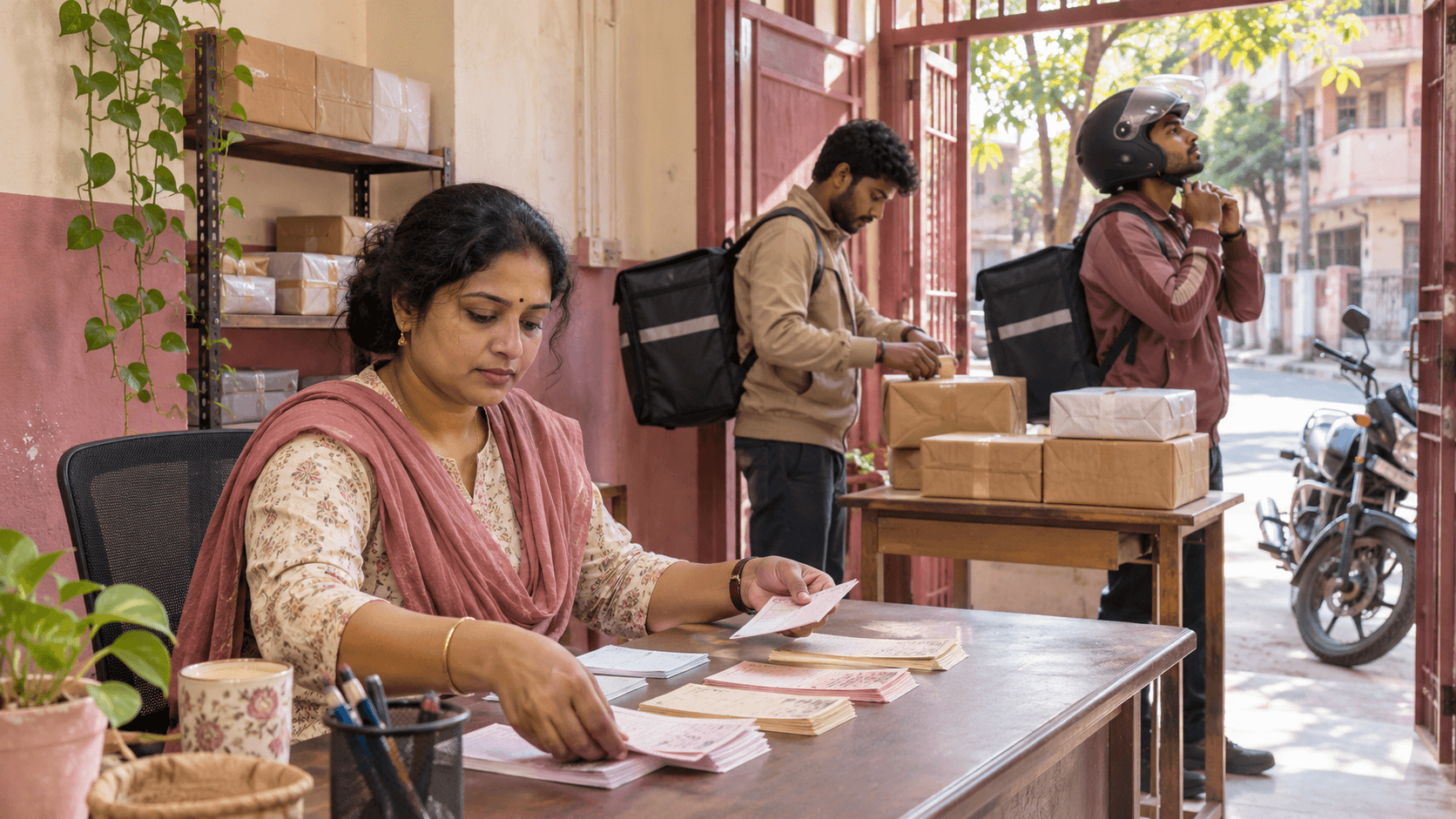


“Delivery between 4 and 6 pm” looks simple on a checkout page. For the dispatcher, it means the item must be packed, the rider must have space, the address must be serviceable and the route must still fit around the other stops. If any of those inputs are missing, the slot becomes a guess.
This guide is for a local store or delivery team planning its own dispatch workflow. It focuses on what the website and operations system should agree on before a customer can select a time.
Separate order readiness from travel time
A bakery's cake may not be ready until 3 pm; a pharmacy's packed order may be ready in ten minutes. The earliest departure time is therefore not always the order time. Store an earliest pickup time alongside preparation status, pickup address, package size and any handling constraints.
Then define the delivery promise independently. Some buyers can receive a package only after work; others want it before a shop closes. A dispatcher should see both the requested window and the preparation deadline. If the two cannot be reconciled, the system should offer a later slot rather than silently accepting an impossible promise.
Google's Route Optimization API time-window model distinguishes overall planning time, pickup and delivery windows, and vehicle start and end windows. The documentation also notes that a shipment window constrains when a visit starts; it does not automatically guarantee the visit finishes inside that window. That detail matters when a delivery requires unloading or customer verification.
Make slot availability depend on actual capacity
An online form should not keep showing “today, 5–7 pm” after the last rider's route is full. A practical slot calculation considers the current orders, rider shifts, service area, approximate stop duration and a buffer for traffic or failed contact. If the business cannot yet calculate route capacity automatically, set a conservative slot quota and let a dispatcher approve exceptions.
Consider a two-rider team with morning pickup and evening delivery rounds. A new order at 4:30 pm may fit geographically but still miss the packing cutoff. A system that checks only distance would accept it incorrectly. The first release can use simple zones and cutoffs; route optimisation becomes useful when volume and constraints justify it.
Display the terms to customers clearly: when they must order, which pin codes are covered, and whether the window is an estimate or a firm booking. Record the version of the promise attached to each order so support staff know what was shown at checkout.
Design for the failed attempt
Customers may be unreachable, the address may be incomplete, or a rider may lose time at an earlier stop. A dispatch dashboard needs a reason code, a timestamp, a next action and an owner for each exception. “Failed” alone cannot tell support whether to call, reschedule, return the parcel or refund a delivery fee.
Use a customer notification when an order is dispatched and another when a delivery is delayed or rescheduled. The notification should reflect the actual driver state rather than a scheduled timer. Keep proof of delivery appropriate to the product and privacy expectations; a photo of a doorstep is not necessary for every handoff.
If I were building this through adityazen, I would start with the dispatcher's current paper or spreadsheet workflow, then model the few decisions that cause missed windows. The useful first system may be a capacity-aware booking page and a clear exception queue, not a complex mapping engine. Accurate promises are built from real operating limits.


