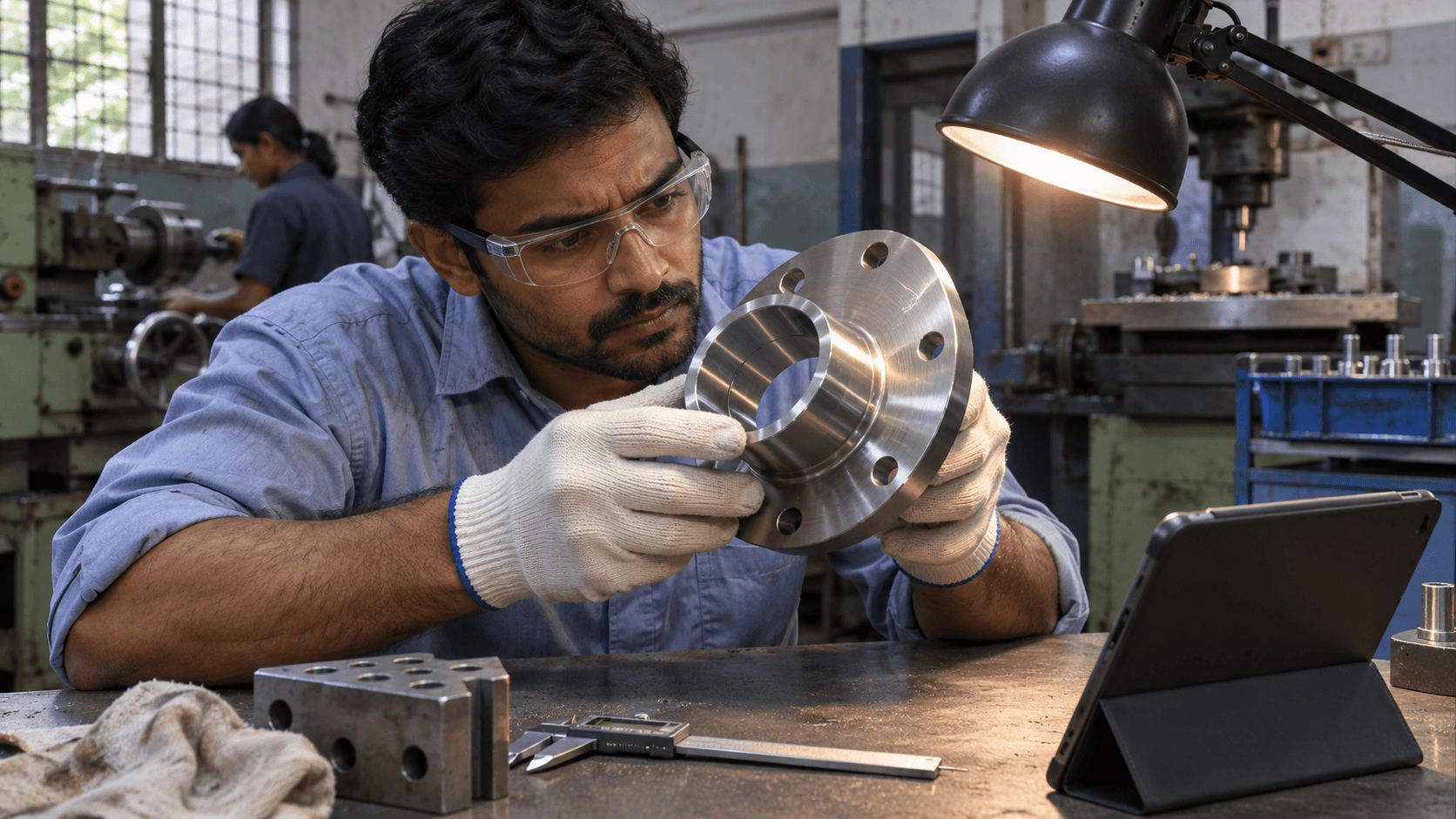


A factory supervisor photographs a scratched component. The inspection app says "pass" because the light hides the scratch. On another shift it rejects a good component because a shadow looks like damage. The model is only one part of the process; the photo setup and review rule matter just as much.
Google's ML Kit image labeling guide explains how a mobile app can obtain labels and confidence values. General image labels, however, are not a validated defect classifier for a specific manufacturing line. That requires examples from the actual products, cameras and lighting conditions.
Design the capture station first
Specify the distance, angle, background and light for each product type. Associate every image with item ID, batch, station, time and operator. Ask the operator to retake a blurred or incomplete photo before inference. A model cannot recover a missing side of a product.
If the same part is inspected at several stages, identify which stage produced each photo. Otherwise a defect may be blamed on the wrong step. Keep originals for the period your quality process requires; do not assume a compressed preview is enough for investigation.
Define what the model may decide
Start with a narrow defect category that a human can label consistently. Measure false passes and false rejects on a held-out set from different shifts. Route low-confidence and safety-critical cases to a reviewer rather than automatically accepting them. The threshold should reflect the cost of an escape compared with the cost of manual review.
Give reviewers the image, predicted class and reason for escalation. Record their decision and a short defect code. Do not turn every correction into training data without checking label quality and consent.
Keep an audit path through release
The system should show whether an item is awaiting review, accepted, rejected or reworked. Prevent a downstream shipment action while a required review is unresolved. Test offline capture, duplicate scanning and camera replacement before a wider rollout.
For a pilot, compare the app against the existing inspection process on one product family. If you have sample photos and a clear defect checklist, share the inspection step with me at adityazen. I can help scope the mobile capture and review workflow before discussing a model.