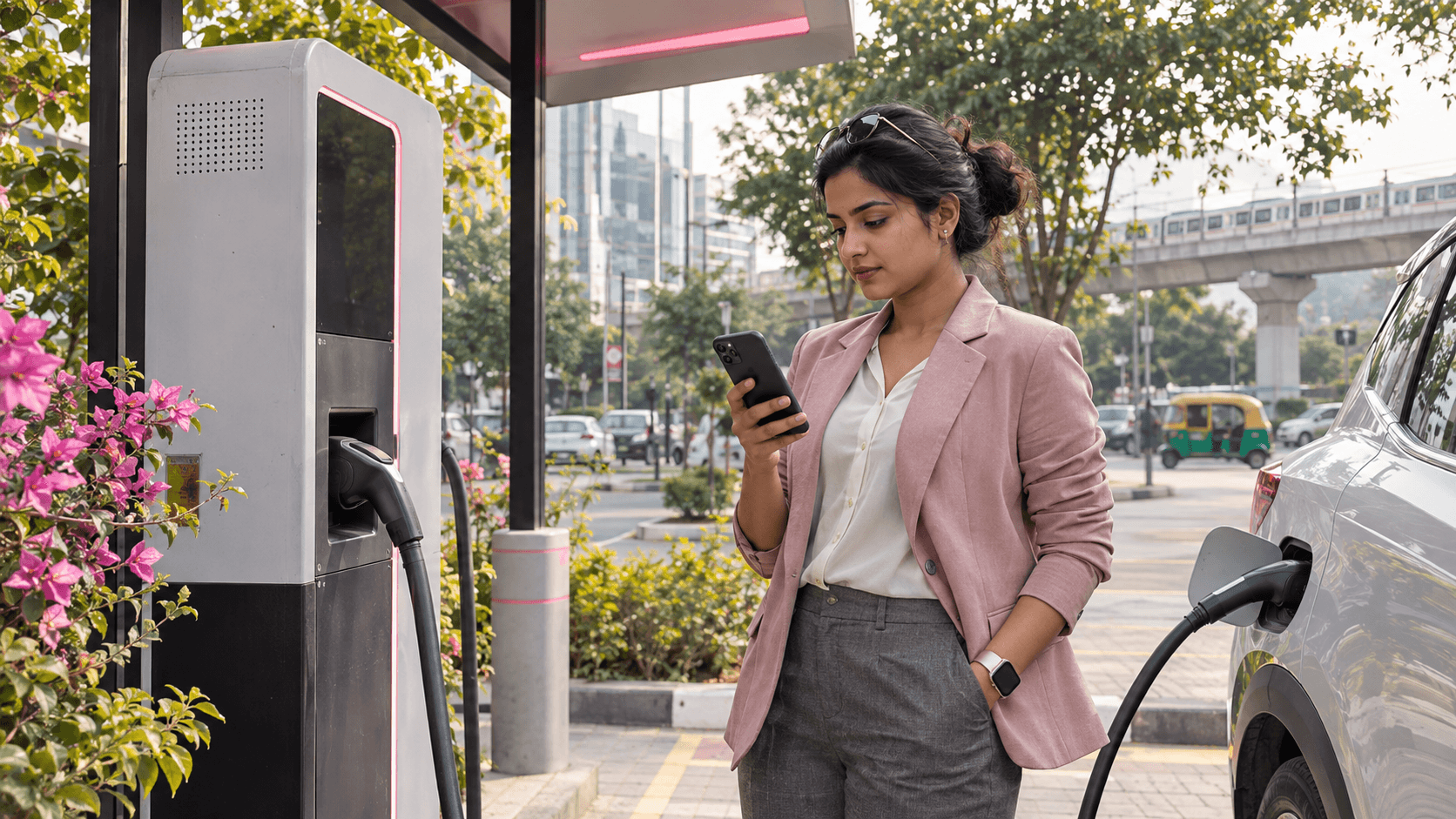


An EV driver sees a “free” charger in an app, drives across town and finds it occupied. The location pin was correct, but the status was old. For a charging network or startup, that is a trust problem more serious than a missing map animation.
Availability should tell a driver what the system knows and how recently it knew it. Before adding a reservation or payment flow, make the station record useful for a real trip.
Model the station the driver can use
One site may contain several charging units, and each unit can expose different connector types and power levels. A driver needs the address, access hours, connector compatibility, price information where available and an honest status. A single “station available” badge can mislead when the only working connector does not fit their car.
The Open Charge Point Interface describes exchange of static charge-point information and real-time status between operators and mobility services. It offers a useful integration model, but it does not magically create operator coverage or guarantee that a hardware update arrived on time. Record which operator supplied each status and the timestamp of the latest successful update.
Design for stale and missing updates
Show “available,” “occupied,” “out of service” or equivalent states only when the feed supports them. If the latest update is too old for the product's chosen threshold, show “status unavailable” or “last updated…” instead of continuing to display green. The threshold should follow the operator's update pattern and the real journey, not a decorative UI choice.
For example, if a charger last reported free 40 minutes ago and the operator connection has since failed, the driver should not see the same confidence as a charger updated moments ago. An operator dashboard should flag stale stations so staff can investigate the device or connection. Keep a history of status changes for troubleshooting, with suitable retention rules.
Google's Places API reference includes EV charging fields and a last-update timestamp for certain availability information. If you use a third-party place listing, check which fields are actually returned for your market and station before treating it as a real-time source. A map listing and an operator feed may disagree; the product needs a documented source-of-truth rule.
Make the trip decision easy
Filters should start with connector compatibility, then operational status, distance and access hours. Show the route destination at the station entrance if the pin alone is confusing. Tell users if a charger is in a paid car park or a location with limited access. On a weak connection, keep the last known station details visible but clearly mark that live status could not be refreshed.
Do not add “reserve” merely because the interface has room for a button. A reservation needs operator support, a hold period, cancellation rules and a reliable transition to the charger. Otherwise it creates another false promise. Likewise, a payment screen needs to be tied to the actual operator's session record.
When I design Android and web products at adityazen, I start with the awkward journey: the preferred charger fails to update while a driver is already travelling. That case defines the status copy, fallback data and operator alert far better than a polished empty map.
Test one station with multiple connectors, one offline charger and one stale feed. Ask a driver to choose where to stop using only the app. If they cannot tell what is genuinely available, improve the data model and wording before adding more features.