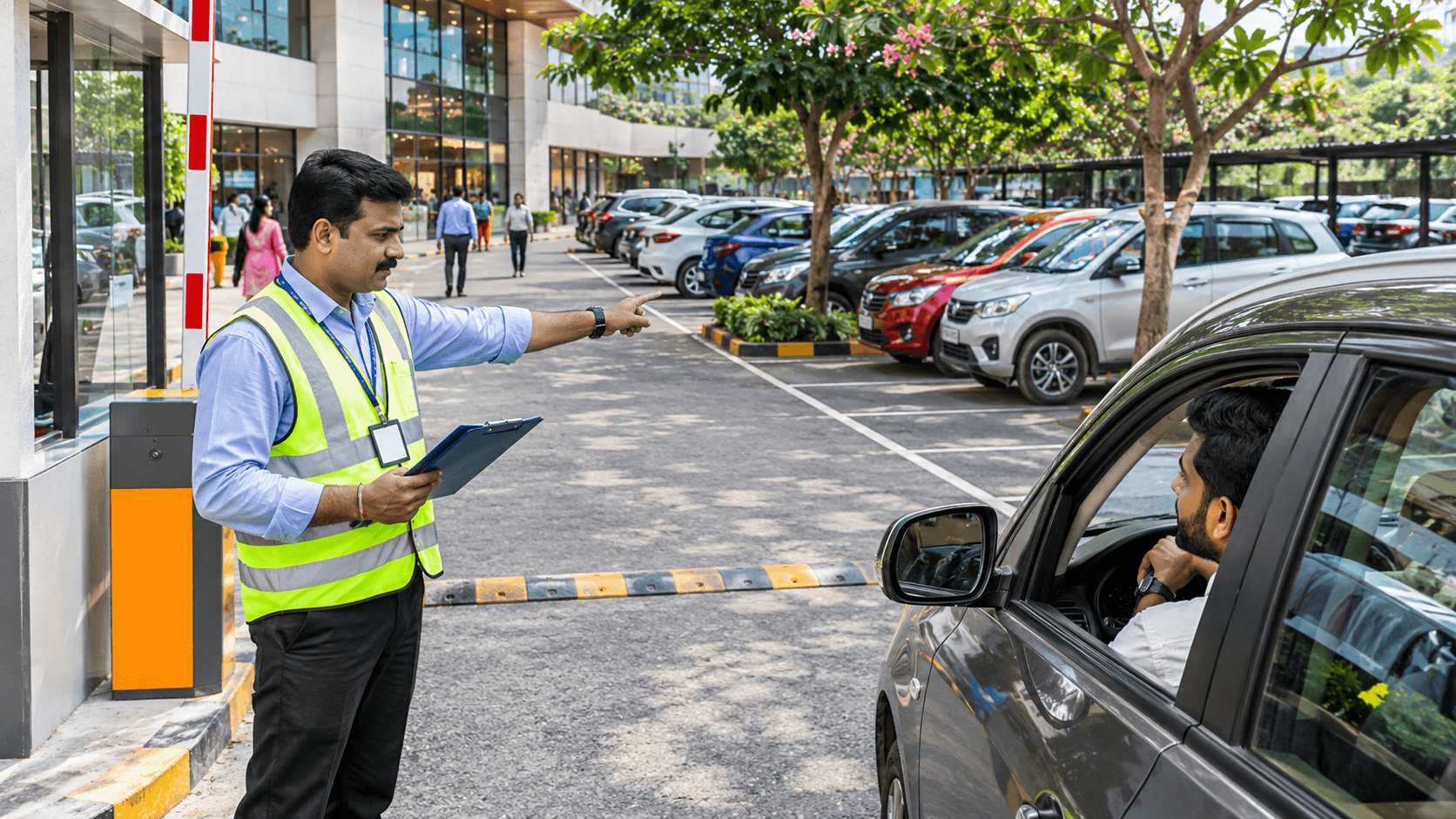


An office visitor reserves a parking space, arrives at the gate and finds every visitor bay occupied. The app may show a neat map, but the underlying count is stale. A useful parking system begins with the gate and allocation rules, not the map screen.
Commercial parking products already advertise live availability and reservations, which shows the buyer expectation; one Indian parking management listing describes both. The implementation question for a property owner is how that availability is measured and who can correct it when an entry or exit was missed.
Define which spaces can actually be offered
List bays by property, level and type: tenant allocation, visitor, accessible, EV charging or staff. Some bays may be shared only at certain hours. A tenant's assigned space is not available to a walk-in just because it looks empty. Write these rules down before designing the app.
For a small commercial building, start with one visitor pool and a gate operator marking vehicle entry and exit. The available count is then capacity minus active occupancy minus held reservations, with a safe buffer if operations need it. Do not call the count “live” if updates happen only once a day. Sensors or camera integrations may improve accuracy later, but they introduce installation, maintenance and exception handling costs.
Treat a reservation as a timed claim
A booking should include arrival window, vehicle identifier, visitor contact and host or tenant. Reserve capacity in one transaction so two visitors cannot claim the last bay. Specify what happens if a driver arrives late, cancels or leaves early. A no-show release policy should be visible before the visitor books.
At the gate, the attendant should be able to search by booking code or vehicle number and mark arrival. If the booked bay is blocked, the operator needs a reassignment path and a reason field. The system should never force staff to create a second reservation just to fix a real-world exception. A simple offline fallback matters if the gate has unreliable connectivity.
Decide when a mobile app is justified
For occasional visitors, a mobile-friendly booking link can be easier than installing an app. A dedicated Android app makes more sense when employees or guards use the system every day, need fast scanning, or must work offline. A property with multiple sites may need central reporting, tenant permissions and consistent vehicle records. Those are later decisions, not the first screen to build.
Google Wallet's generic passes can represent a parking pass, but issuer setup and pass management are additional work. A booking confirmation page or message can be sufficient for the first version. Do not make a pass integration a prerequisite for an accurate gate workflow.
When I scope this kind of system at adityazen, I walk through a busy arrival period with the property team and map every point where the count can become wrong. Then the web and Android interfaces can be designed around the actual attendant workflow.
Track reservation no-shows, gate overrides, full-lot turnaways and count corrections. If those remain high, fix the operating process before expanding to more properties.